
🎥 AI as a co-creator – Promoting efficient material creation and reflective use of AI in programming and theses

Description
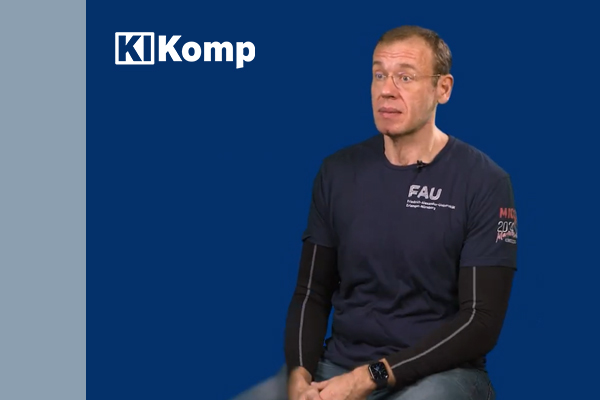
Prof. Dr. Andreas Maier, head of the Chair of Pattern Recognition at FAU, has been using AI for many years to create, prepare, and improve teaching materials. Today, large language models are used to create presentation slides more quickly, set formulas, generate illustrations as code, or convert old lecture transcripts into new chapter drafts. In addition, AI supports students in programming, large-scale software engineering projects, and the creation of scientific texts.
The central guiding principle is that AI should make teaching more efficient without replacing professional responsibility or judgment. Quality assurance remains crucial, both for generated content and for the use of AI in theses.
Faculties/Departments
Faculty of Engineering, Chair of Pattern Recognition
Funding
KIKomp
Course Type
- Lecture
- Exercise
Target Group
- Bachelor
- Master
Didactic Activities
- activate/motivate
- guiding/communicating
- explaining/presenting
- examine/evaluate
Digitale Tools
- KI
Project Lead
Prof. Dr. Andreas Maier
Keywords
AI
Initial situation
The department has been working on AI methods for years and integrated them into teaching early on, from automatic subtitles to complete lecture transcripts. At the same time, producing high-quality materials traditionally requires a lot of effort, especially when it comes to tech-based slides, complex illustrations, or mathematical formulas. With student numbers on the rise, the need for efficient methods is growing even more.
Goals
The aim is to use AI in such a way that teaching materials can be produced more quickly, more clearly, and in a legally compliant manner. Students should learn to use AI in a reflective manner, from programming to academic writing. At the same time, academic quality and individual achievement remain central, especially in theses. The development of a basic AI course for all degree programs is also part of the strategic considerations.
“The use of AI will become one of those soft skills that gives you a decisive advantage over others.”
– Prof. Dr.-Ing. Andreas Maier
Concepts, implementation, methods
Students generate tech code from tables and images, set formulas, draft initial textbook chapters from lecture transcripts, and assist with documentation or test case generation in programming courses. Students are introduced to the critical use of AI at an early stage: in the basic phase, AI is deliberately used less, but in later project courses it is specifically integrated. In addition, AI accompanies the writing process in final theses, with clear rules, documentation, and quality control ensuring that students produce independent academic work.
“But if I specify exactly what I want, I can achieve very, very good results and save myself a lot of work.” – Prof. Dr.-Ing. Andreas Maier
Experiences
- AI significantly reduces the time needed to prepare new teaching materials, especially when setting formulas, tables, and tech code.
- Students only use AI in programming once they have mastered the basics, which improves learning success.
- In advanced courses, AI increases efficiency: documentation, tests, and code generation can be created more quickly.
- Its use in theses leads to better texts, but only when used correctly; unspecific prompts increase the risk of plagiarism and errors.
- Personal code reviews and discussions remain central to testing understanding and preventing AI-related errors.
Success criteria
- Teaching materials are produced faster and in higher quality; slides become more illustrative and legally compliant.
- Students develop realistic AI skills: they know how to use AI sensibly and where typical sources of error lie.
- Theses remain scientifically sound because the use of AI is documented and critically reviewed.
- Examination formats are continuously developed to reduce the risk of cheating and test depth of understanding.
Back to overview“That’s why it’s better to learn how to use it (AI as a tool) properly. Address the whole topic openly, document it, and give others a clear advantage. – Prof. Dr.-Ing. Andreas Maier